
Sakai Takayuki.
A considered
cut.
Japanese kitchen knives, from hammered Damascus gyuto to traditional deba. Choose by shape, steel and the way the blade works.
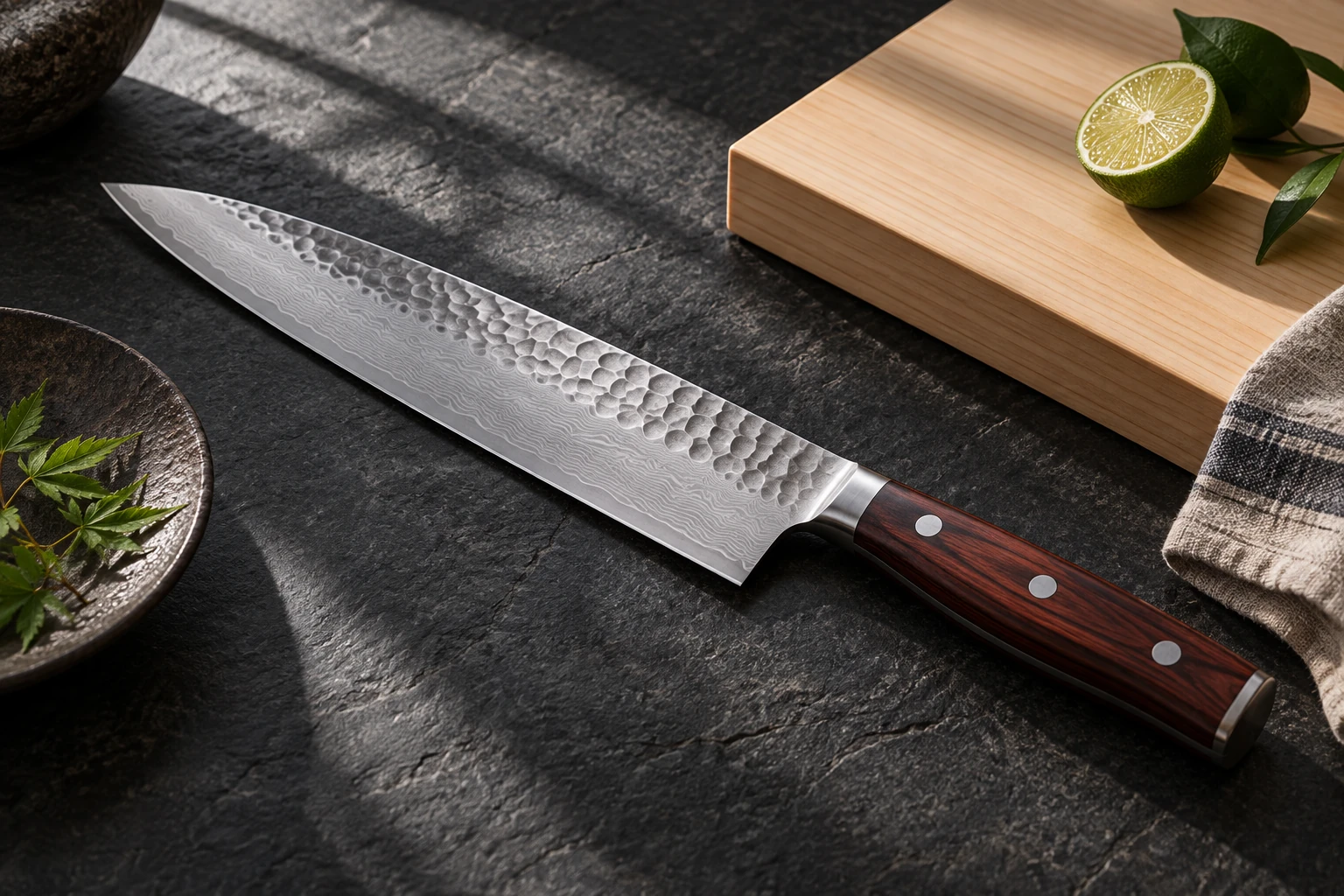
Start with the blade.
Four Sakai Takayuki models with distinct lengths and profiles. Compare the form before choosing the finish.
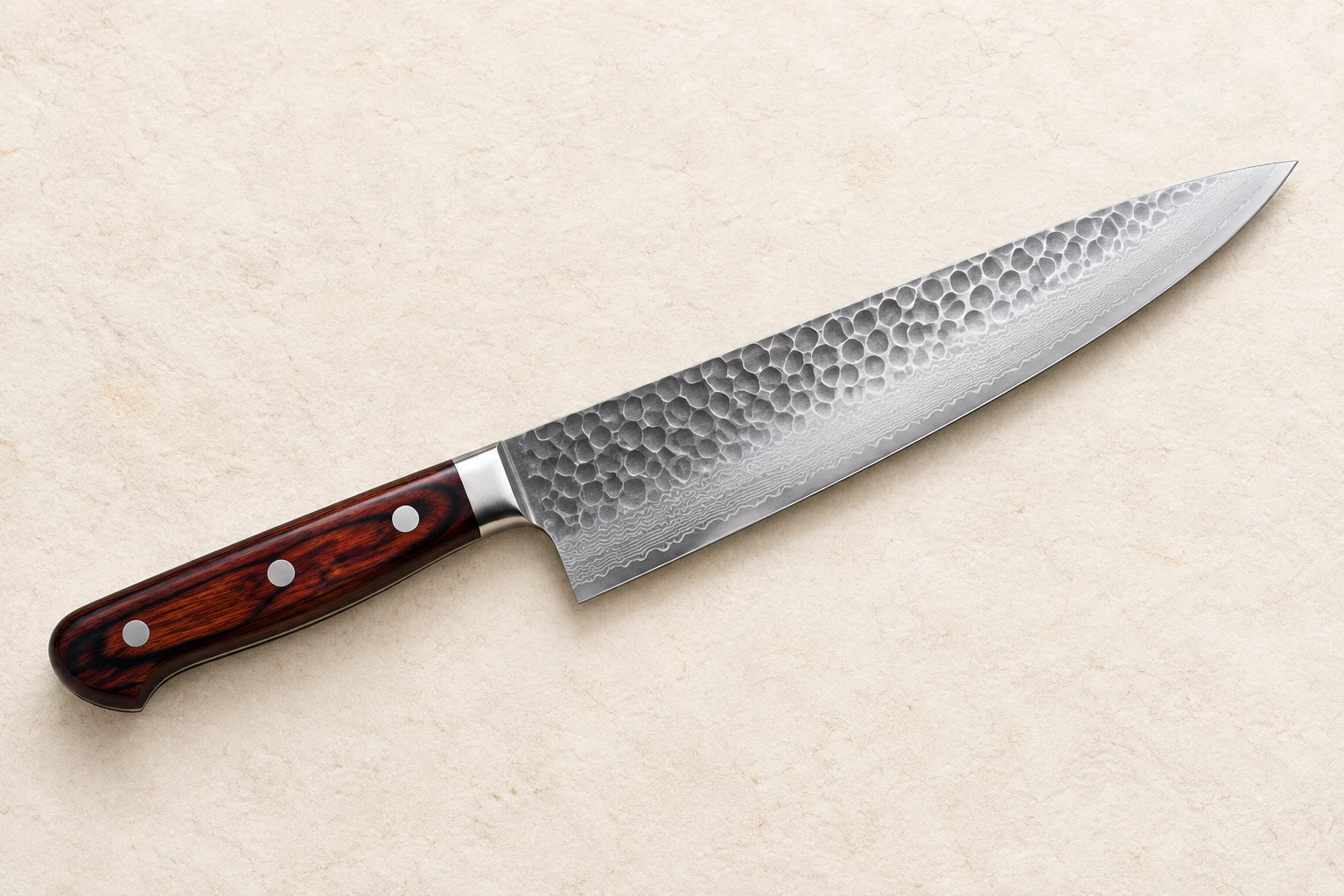
33-Layer Gyuto
VG-10 core · Hammered Damascus
A long blade for larger ingredients and extended slicing strokes.
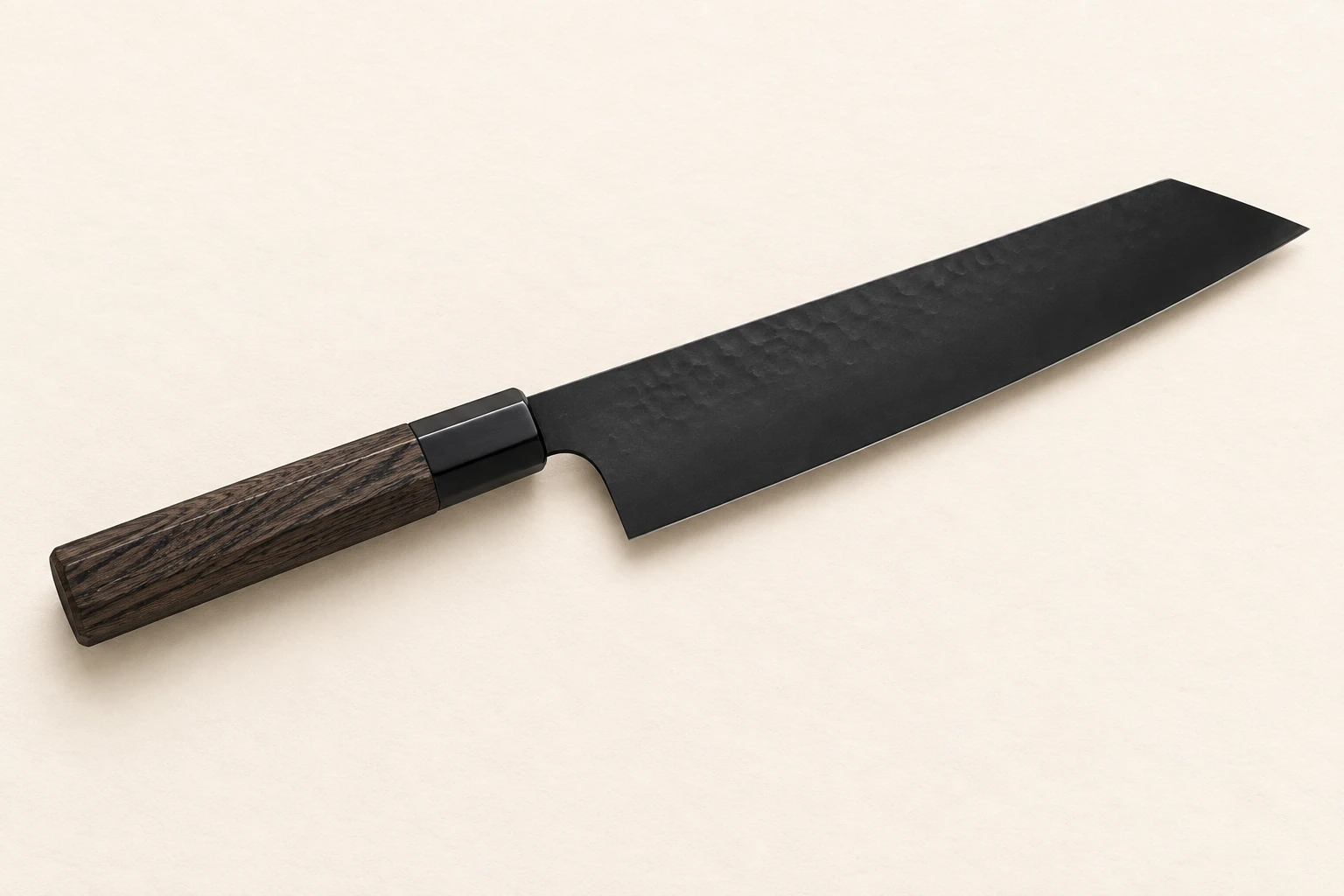
Kurokage Kengata Gyuto
VG-10 · Black hammered finish
An angular tip and dark blade in a shorter chef’s knife format.
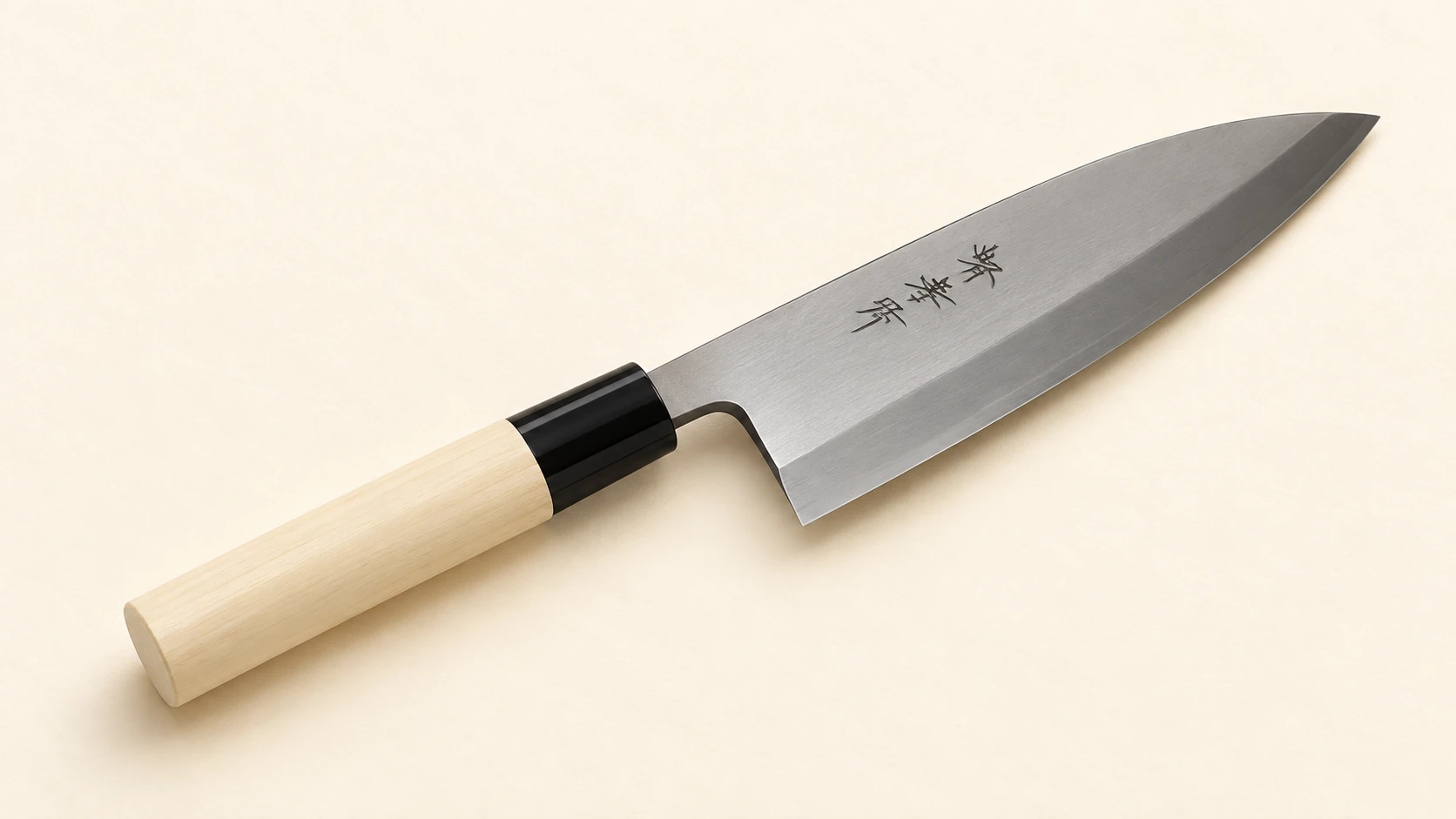
Kasumitogi Deba
Yasuki white steel · Model 06036
A broad traditional blade with a pale wooden handle.
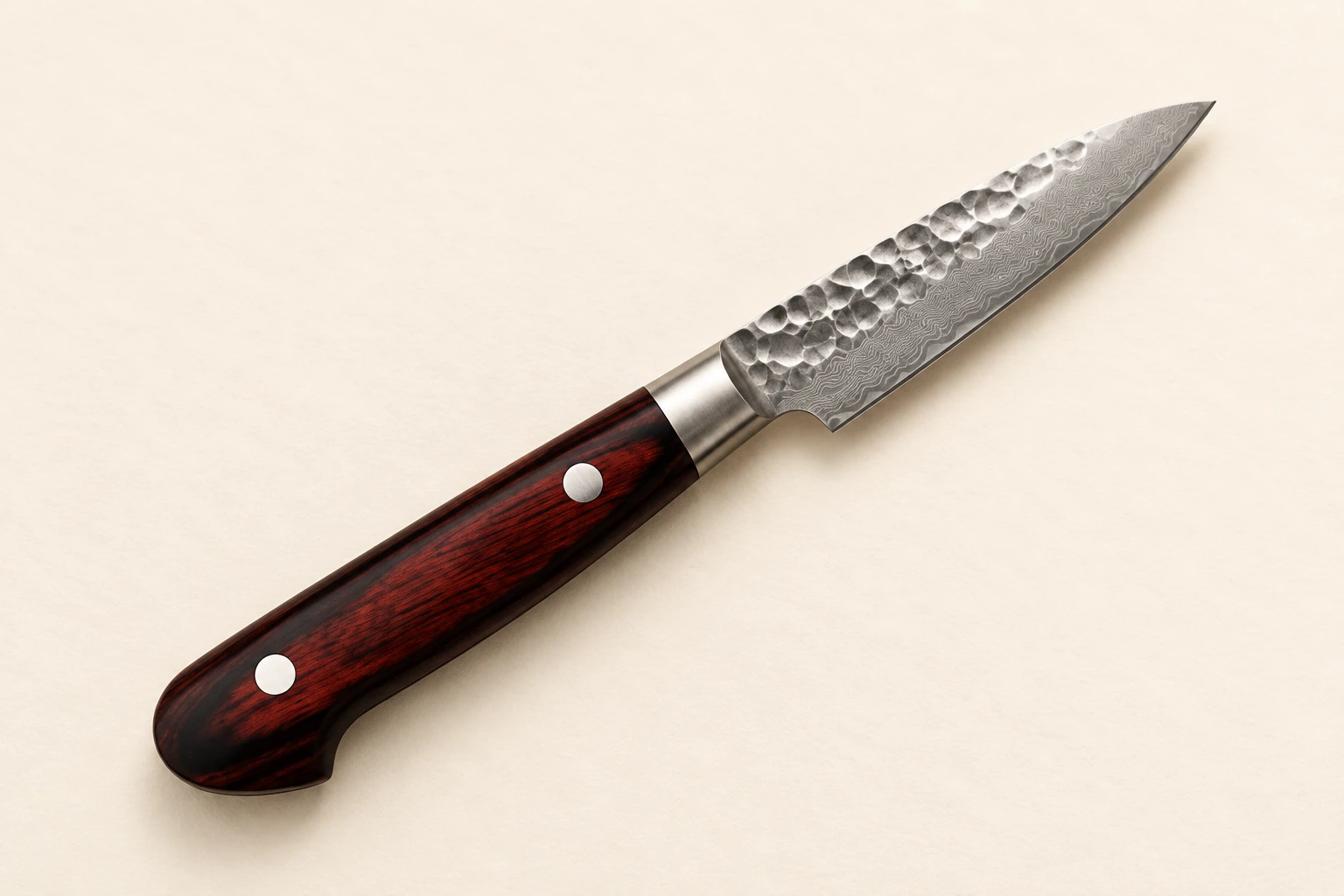
Damascus Paring Knife
VG-10 · Hammered finish
A compact pointed blade for small fruit and vegetable tasks.
Product images are generated representations. Check the linked listing for exact product appearance and included items.
Rooted in Sakai.
Shaped by craft.
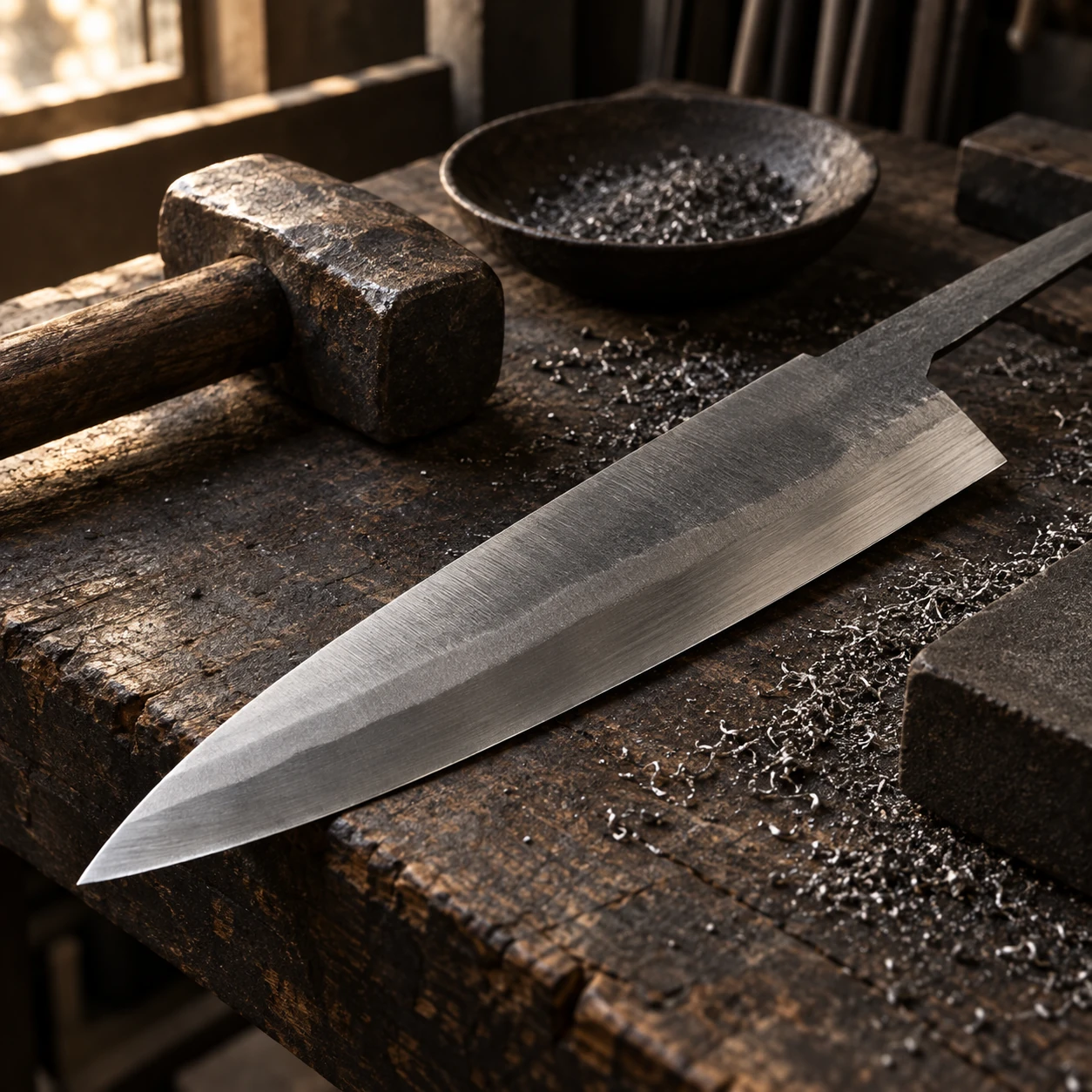
Sakai Takayuki is the knife brand of Aoki Hamono Seisakusho, based in Sakai, Osaka. The company was founded in 1947.
Sakai’s blade-making tradition brings together specialists in forging, sharpening and handle fitting. Aoki Hamono’s own factory allows forging and blade craftsmen to work together.
Look beyond
the finish.
01. Blade length
Match the working length to the ingredients and board space.
02. Steel & care
Check the core steel and care requirements of the exact model.
03. Shape & bevel
Check the intended task, edge geometry and handedness.
A few things
to know.
Which Sakai Takayuki knife suits everyday prep?+
A gyuto is a useful starting point for varied cutting tasks. Compare blade length with the size of the ingredients and the space on the cutting board; the 240 mm and 190 mm knives here offer different working lengths.
What does Damascus describe?+
Damascus refers to the visible layered steel construction or pattern. Compare the core steel, blade shape and dimensions as well as the surface finish; the selected 33-layer gyuto lists a VG-10 core.
Are all the blades stainless?+
No. The selection includes VG-10 models and a Yasuki white steel deba. Check the exact model’s material and care instructions instead of applying one specification to the whole brand.
What should be checked before choosing a deba?+
Check blade length, bevel and handedness for the exact listing. A deba is a specialized form for fish preparation and requires a different technique from a general-purpose gyuto.
How should a Japanese kitchen knife be cared for?+
Follow the instructions for the exact knife. Hand-wash and dry it promptly, protect its edge in storage, and use a suitable cutting board. Avoid twisting the fine edge through hard or frozen food.
From the kitchen.
Selected comments from public discussions about Sakai Takayuki. The models discussed are identified below and may differ from the product selection.
I bought a Sakai Takayuki during my first stay in Japan, maybe not the best pick amongst the options I had back then but I still like and use it to this day almost 8 years later and have no regret about it !
I got a Takayuki VG10 for Christmas and I adore it. Great knife, I like not worrying too much about the metal when im not using it and its still razor sharp (sujihiki)
Sakai Takayuki don’t seem to get a lot of love around here but my Ginga ZA18 Santoku is a fantastic home kitchen knife.
Quotations retain the original wording. Ownership is self-reported; purchases have not been independently verified. These selected comments are not an overall rating of the brand.